

NPC26 in Detroit
Click the Photo to View the Gallery
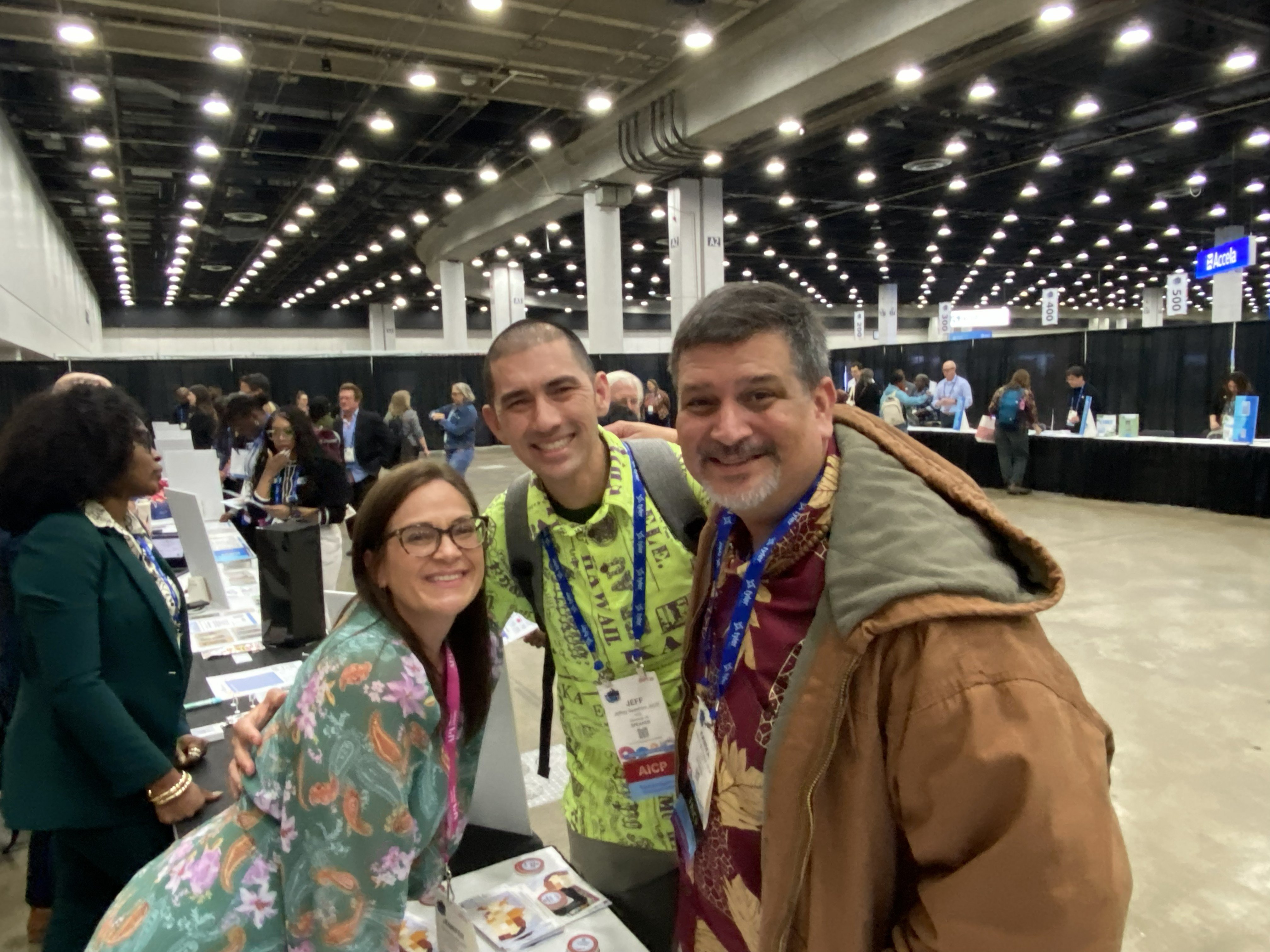
FAICP Inductees
Induction to the American Institute of Certified Planners College of Fellows is a high honor and a significant career achievement. Fellows are nominated by their peers in recognition of their outstanding contributions as planning professionals. TIPD is proud to share that three TIPD members became Fellows at the 2026 National Planning Conference.
We asked each new Fellow to reflect on what the FAICP means to them, personally and professionally. Their answers, preceded by a short bio, are shared here.

Andrea Ouse
Andrea Ouse, FAICP currently serves as the Director of Community Development for the City of West Sacramento overseeing the City’s Planning, Building, Development Engineering, Transportation and Mobility, Sustainability and Code Enforcement functions. She currently serves as the Region VI APA National Board Representative, and was previously the President of the American Planning Association, California Chapter. She is also a member of the California Planning Roundtable, an organization that advances planning practice and influences policy through innovation and leadership to create healthy, prosperous, and equitable communities.
Starting in June 2026, Andrea will pivot into a new role; as Deputy Executive Director of the Federated Indians of Graton Rancheria (FIGR). This exciting new chapter is especially meaningful to her, as she is a tribal citizen of FIGR.
Andrea received a Bachelor of Science in City and Regional Planning from California Polytechnic State University, San Luis Obispo, and a Master of Public Administration from California State University, East Bay.
Reflection on Induction
Being inducted into the AICP College of Fellows is deeply meaningful to me, both professionally and personally. As an Indigenous planner, the recognition carries an added significance because it reflects not only my own journey, but the importance of bringing Indigenous perspectives, values, and ways of thinking into leadership, planning, and community-building. To have my contributions recognized by peers across the profession is both humbling and affirming.
Throughout my career, I’ve tried to approach planning as an act of stewardship. Planners balance growth, sustainability, community identity, and long-term responsibility for future generations. FAICP feels less like a culmination and more like a responsibility to continue mentoring others, elevating underrepresented voices, and helping shape a profession that is more inclusive, thoughtful, and connected to the communities it serves.

J.D. Tovey
J.D. Tovey, FAICP, serves as Executive Director of the Confederated Tribes of the Umatilla Indian Reservation (CTUIR), where he also serves as an enrolled tribal member. He previously served nearly a decade as Planning Director and has dedicated his career to advancing Indigenous planning practice, sovereignty, community development, and the integration of Indigenous knowledge into planning. J.D. holds degrees in Landscape Architecture, Urban Planning, and Urban Design, with doctoral studies focused on Indigenous planning practice and urbanism. He is also a co-author, speaker, and advocate for Indigenous planning and decision-making.
Reflection on Induction
Being inducted into the College of Fellows is both deeply humbling and profoundly meaningful. Much of my career has focused on elevating Indigenous voices, planning traditions, and ways of knowing that have historically been underrepresented within the profession. To have those contributions recognized by my peers is not only a personal honor, but also recognition of the growing importance and legitimacy of Indigenous planning practice within the planning profession.
Professionally, I view FAICP less as a culmination and more as a responsibility. It reinforces my commitment to mentoring future planners, advancing Indigenous planning practice, and continuing to contribute through leadership, writing, teaching, and service to the profession. As I look toward the next phase of my career, I hope to continue creating space for Indigenous perspectives and helping shape a more inclusive future for planning.
FAICP is not a finish line; it is a responsibility to continue opening doors for those who follow.
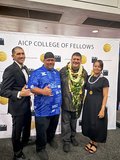
Kawika McKeague
Kawika McKeague, FAICP, is the Pelekikena (President) of G70, a Hawaiʻi-based planning, design, and environmental practice. A Kanaka Maoli (Native Hawaiian) planner and cultural practitioner, his work is grounded in the belief that planning is not merely a technical exercise, but a kuleana to people, place, memory, and the generations who will inherit the consequences of the decisions we make today. For more than two decades, he has worked across Hawaiʻi and the Pacific at the intersection of community planning, environmental stewardship, Indigenous land use policy, cultural resource protection, and long-range visioning. His practice seeks to restore pilina (ancestral connection and relationship) between communities and ʻāina (traditional term for “land” stemming from the thought of “that which feeds”) through planning processes rooted in cultural integrity, healing, self-determination, and aloha for place.
Reflection on Induction
Being inducted into the College of Fellows is deeply meaningful because I come to planning through a Hawaiʻi-rooted lens, through acts of advocacy for Native communities, and through an invocation of kuleana, an ancestral obligation and responsibility to place that is older than the profession itself. I was raised to understand that ʻāina holds memory, carrying the breath of our ancestors and, within that breath, a guiding responsibility for the future. That understanding has shaped the way I have tried to practice throughout my career, with a constant awareness that planning decisions are never simply confined to the language of policy, permitting, or land use maps, because in Hawaiʻi the work inevitably moves through places already carrying generations of struggle and sacrifice, but also the hard-earned hope of people who have continued to care for place, culture, and one another. What may appear as a procedural decision within a system can profoundly affect whether communities remain ancestrally relevant within the places that shaped them, whether cultural relationships to ʻāina are sustained or slowly diminished over time, and whether people continue to recognize themselves, their history, and their sense of belonging within the future being created around them. I have always felt that responsibility deeply, knowing that without care, planning can erode the relationships that hold communities to place, but when approached with humility and purpose, it can also become a means of restoration, a way of honoring what has endured, and a pathway for communities to carry forward who they are on their own terms.
Personally, I receive FAICP with deep humility because I know this recognition does not belong to me alone. It carries the love and sacrifice of my grandparents who raised me; the guidance of kūpuna and cultural practitioners who trusted me with their knowledge, their memories, their responsibilities, and the deeper truths of the places; the courage of communities who allowed me to walk beside them; and the steady belief of mentors and colleagues who helped affirm and encourage both legitimacy and necessity leading with aloha. To be recognized by peers in this way is meaningful because it affirms that planning grounded in kuleana, cultural memory, and aloha for place and people is not outside the profession looking in. It is part of what can help the profession remember its highest purpose.
Professionally, I hope this recognition creates a stronger platform to continue advancing Tribal and Indigenous planning not as a specialty practice at the margins of the profession, but as a legitimate and necessary planning praxis grounded in cultural stewardship, relationship, reciprocity, and responsibility to place and people. So much of my own journey has been shaped by the work, courage, and teachings of all those who have come before, those who fought to protect culture, land, language, memory, and community at times when Indigenous perspectives were often dismissed or excluded from formal systems of planning and governance. I hope it encourages younger planners, especially Indigenous and place-based practitioners, to understand that their cultural identity, lived experience, ancestral knowledge, and ways of seeing the world are not separate from professional excellence or rigor, but are essential to helping the profession evolve toward a more human, relational, and culturally accountable future.